Hospital Trolleys Manufacturing:
Essential Healthcare Mobility Solutions
May 13, 2026
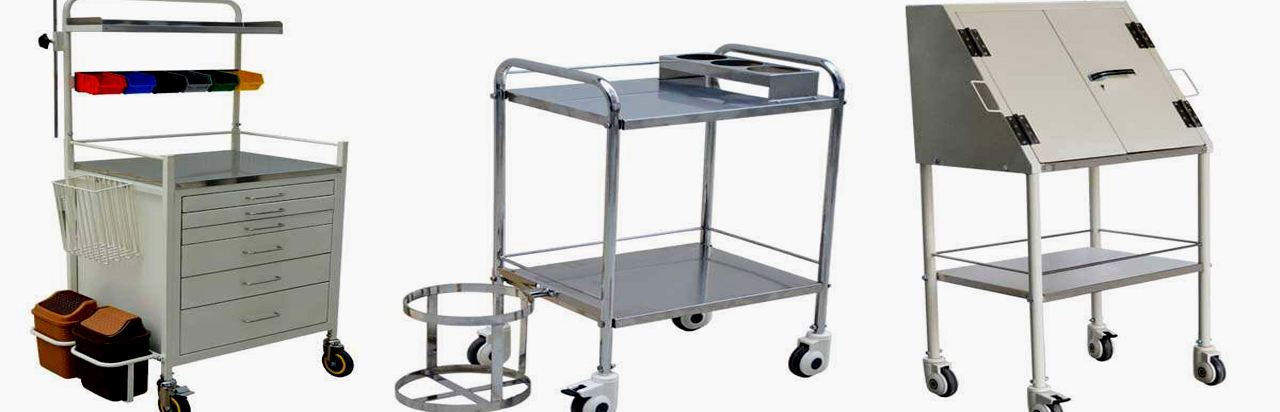
Hospital trolleys are among the most important pieces of medical furniture used in hospitals, clinics, diagnostic centers, and healthcare facilities. Designed for mobility, organization, and efficiency, hospital trolleys help healthcare professionals transport medicines, surgical instruments, medical equipment, and patient care supplies safely and conveniently.
The manufacturing of hospital trolleys requires precision engineering, durable materials, hygienic designs, and strict quality standards to meet the demanding needs of healthcare environments.
In this blog, we explore the hospital trolley manufacturing process, types of hospital trolleys, materials used, key features, quality standards, and the latest trends in the healthcare furniture industry.
The manufacturing of hospital trolleys requires precision engineering, durable materials, hygienic designs, and strict quality standards to meet the demanding needs of healthcare environments.
In this blog, we explore the hospital trolley manufacturing process, types of hospital trolleys, materials used, key features, quality standards, and the latest trends in the healthcare furniture industry.
1. Medicine Trolleys
Medicine trolleys are used for storing and transporting medications within hospitals and nursing stations. They often include lockable drawers and organized compartments.
2. Emergency Crash Trolleys
Crash trolleys are critical emergency response units equipped with life-saving medications, defibrillators, oxygen cylinders, and emergency tools.
3. Instrument Trolleys
Instrument trolleys are commonly used in operation theaters and treatment rooms for carrying surgical instruments and medical tools.
4. Dressing Trolleys
These trolleys are used for wound dressing procedures and carry sterilized dressing materials and medical supplies.
5. Linen Trolleys
Linen trolleys help transport clean and used hospital linens efficiently while maintaining hygiene.
6. Food Service Trolleys
Food trolleys are used in hospitals for meal delivery to patients in wards and rooms.
7. Utility Trolleys
Utility trolleys are multipurpose mobile units used for general transportation of supplies and equipment.
8. Monitor and Equipment Trolleys
These trolleys are specially designed to support medical devices such as ECG monitors, infusion pumps, and diagnostic equipment.
Conclusion
Hospital trolleys manufacturing is an important sector supporting modern healthcare operations. High-quality trolleys improve medical workflow, patient care, equipment transportation, and hospital organization. With continuous innovation and precision manufacturing, hospital trolley manufacturers are contributing significantly to safer, more efficient, and better-equipped healthcare facilities worldwide.
