Infant & Baby Care Equipment Manufacturing:
Advancing Safety, Comfort, and Neonatal Healthcare
May 13, 2026
Infant and baby care equipment plays a vital role in hospitals, neonatal intensive care units (NICUs), maternity wards, pediatric centers, and healthcare facilities. These specialized medical products are designed to provide safety, comfort, monitoring, and medical support for newborns and infants.
The manufacturing of infant and baby care equipment requires precision engineering, child-safe materials, advanced healthcare technology, and strict compliance with medical safety standards. From infant warmers and baby cribs to phototherapy units and neonatal trolleys, every product must meet high standards of hygiene, durability, and reliability.
In this blog, we explore the manufacturing process of infant and baby care equipment, materials used, product types, essential features, quality standards, and the latest trends shaping neonatal healthcare equipment manufacturing.
The manufacturing of infant and baby care equipment requires precision engineering, child-safe materials, advanced healthcare technology, and strict compliance with medical safety standards. From infant warmers and baby cribs to phototherapy units and neonatal trolleys, every product must meet high standards of hygiene, durability, and reliability.
In this blog, we explore the manufacturing process of infant and baby care equipment, materials used, product types, essential features, quality standards, and the latest trends shaping neonatal healthcare equipment manufacturing.
1. Infant Warmers
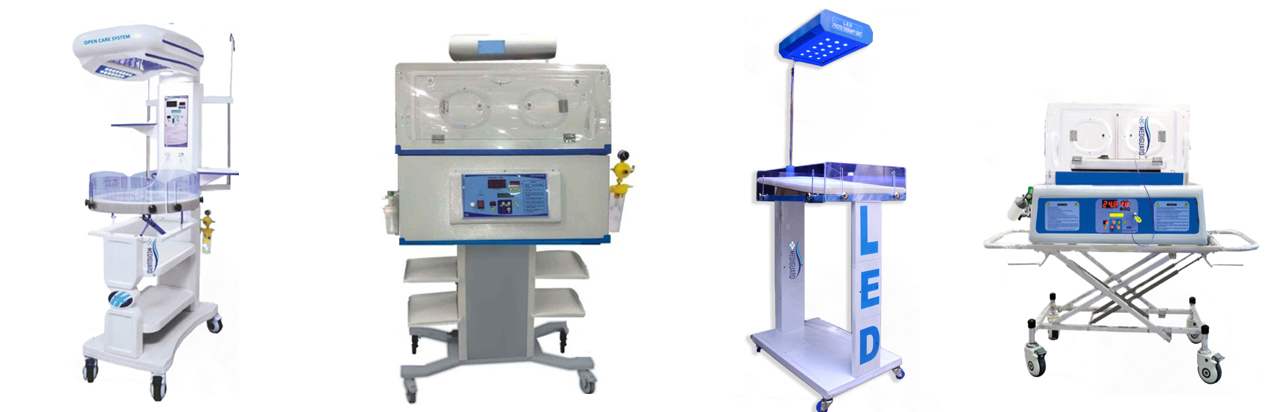
Infant warmers are used to maintain body temperature for newborns, especially premature babies.
2. Baby Cribs and Bassinets
Hospital baby cribs provide safe sleeping and transportation solutions for newborn infants.
3. Neonatal Incubators
Incubators create controlled environments that regulate temperature, humidity, and oxygen levels for critical neonatal care.
4. Phototherapy Units
Phototherapy equipment is used for the treatment of neonatal jaundice in newborn babies.
5. Infant Resuscitation Units
These units provide emergency respiratory support and life-saving care for newborns.
6. Neonatal Trolleys
Mobile neonatal trolleys help transport infants safely within healthcare facilities.
7. Pediatric Examination Tables
Specialized examination tables are designed for infant and pediatric healthcare procedures.
8. Baby Weighing Scales
Digital baby scales provide accurate infant weight measurement for healthcare monitoring.
Conclusion
Infant and baby care equipment manufacturing is a crucial sector supporting neonatal healthcare, infant safety, and pediatric treatment. High-quality neonatal equipment helps healthcare professionals provide safe, effective, and life-saving care for newborns and infants. With continuous innovation and advanced medical engineering, infant and baby care equipment manufacturers are contributing significantly to modern neonatal healthcare and improved infant care worldwide.
